Subject
54 articles
A newly discovered protein helps plants to defend themselves against aphids. It restricts these stealthy insects from draining sugar-rich sap from the plant....
More often than previously thought, fungi are able to infect seeds…what are the consequences? Seeds of tropical trees interact with a wide variety of fungal...
The taste of a fruit is largely determined by its sugar composition. Understanding the mechanisms responsible for the accumulation of different sugars will...
Amur honeysuckle, an invasive plant in the United States, is able to cause drastic changes within invaded ecosystems. Management practices might reduce these...
Roses smell like red, and violets smell like blue: Can flower colors be linked to their scents? In a Mediterranean scrubland, specific combinations of floral...
Plants are able to gather energy from the sun thanks to an evolutionary partnership between photosynthetic bacteria and early living organisms. It is commonly...
Gene therapy is at the forefront of medical research, but...can it help us save a beloved fruit?
It’s spring and the smell of flowers spreads through the air. What we perceive as “smell” are chemical compounds also called “volatiles” which are...
Wondering why modern tomatoes are often so tasteless? New insights on their DNA offer a roadmap to bring back their tasty flavor.
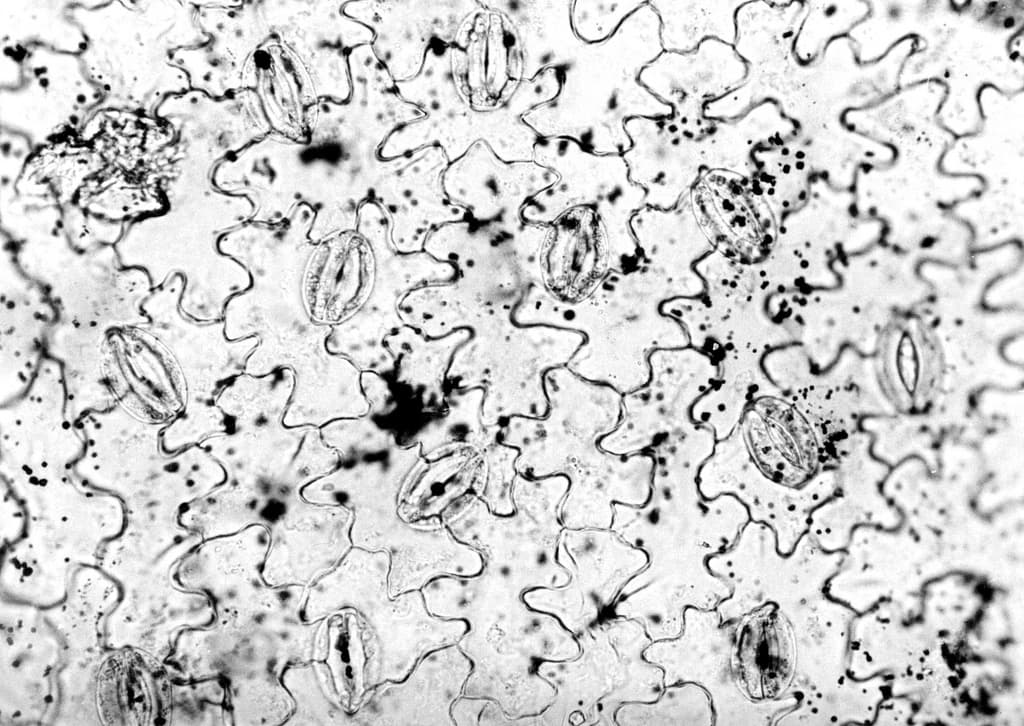
Breathing air in and out is something that we, as humans, perform in every moment of our lives. Plants do likewise thanks to tiny mouths called stomata.
Due to their static nature, plants must adapt to their surrounding environment. Among other challenges, resisting to the sun-heat is a major one. How do they...